
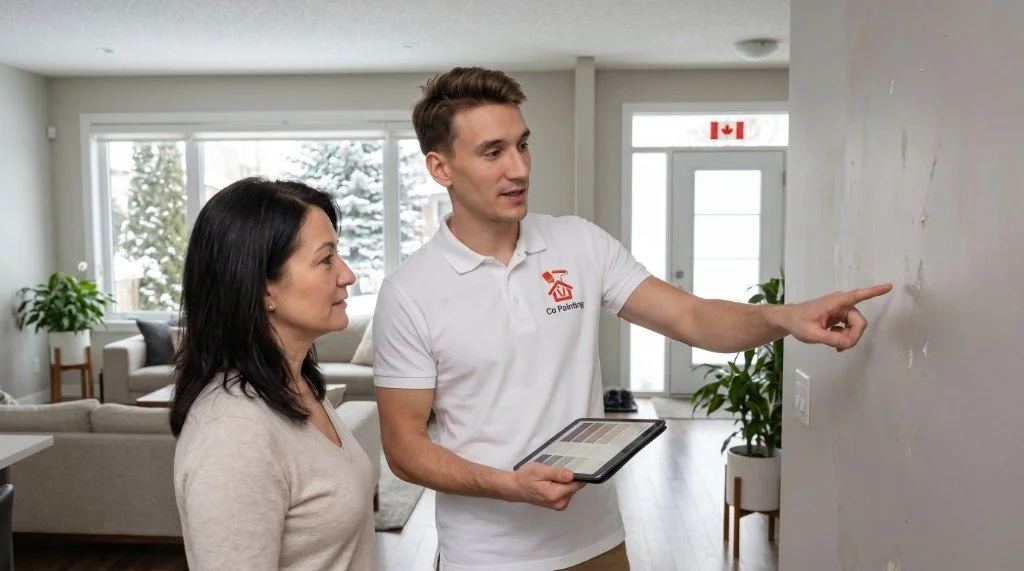
Need Drywall Repair in North York?
Almost every wall in North York is drywall, and the reason is the calendar. The township had 22,908 people in 1941 and over 504,000 by 1971, so the bulk of the housing here went up in exactly the years gypsum board was pushing lath and plaster out of new construction. Behind your paint there is board, tape and joint compound, not three coats troweled over wood lath. That matters, because board fails in its own ways.
The list is short and we see all of it every week. A doorknob punched through the wall behind a bedroom door. Screws popping in a line down one stud after the first cold snap. A hairline over a door frame in a Parkwoods side-split that opens every January and closes by June. In the 1950s and 60s houses through Don Mills it is seams and fastener pops. In the towers along Yonge and Sheppard it is anchor holes left by a TV mount and corners the movers rounded off.
We repair drywall in occupied houses, in rentals between tenants, and in condo units, then prime and paint the same visit when you want it finished and gone.
What Drywall Repair Actually Takes
The size of the damage picks the method. A nail hole or a shallow dent gets filled and spotted. Past about fist size the hole needs backing, because compound with nothing behind it cracks the first time that wall takes a knock. A real opening gets new board cut in and taped like a fresh seam. Deep fills get a setting-type compound, which hardens by chemical reaction instead of drying out, shrinks less, and sets in a cold January house.
Then the build coats, thin, each one feathered wider than the last, with a topping compound on the final pass because it sands easier. A patch can be dead level and still read as a patch if it stops in a hard line. A popped seam needs its tape replaced, not more mud over the bubble. Paper tape carries the higher tensile strength and comes creased, so inside corners get paper. Mesh works on flat repairs, but only under setting compound.
Popped screws come from board that was never pulled tight to the framing, or from lumber that shrank and twisted as it dried. The repair is a new screw about an inch and a half off the pop, driven while we push the panel back to the stud, then the old fastener pulled or reset below the paper, then three coats.
The crack that opens along a top-floor ceiling every winter and closes by summer is not settling. The bottom chord of a roof truss dries out inside the insulation while the top picks up attic moisture, so the truss arches and lifts the ceiling off the partition below. Ontario's new-home guidelines call shrinkage cracking normal until the gap passes 4 mm. Filling it in March only tears it open in December, so it gets a floating corner instead.
How far we take the finish depends on the light. The gypsum industry standard calls a normal smooth painted wall a Level 4, and saves Level 5, a skim coat over the whole surface, for gloss, deep colours and critical lighting, meaning strong side light off a window. Under that light a repair which passes at arm's length photographs through the paint. The written inspection rule is five feet back in the room's own light.
Last is the dust. Sanding compound travels through a whole house if nobody plans for it, so the room gets sealed, sanding runs with vacuum assist, and we clean daily. In a pre-1980 house the power sander stays in the van, because compound from that era can contain asbestos, and Ontario classes power sanding it without HEPA collection as the highest-risk work. Skims, new board and plaster sit under our wider drywall contractor work in North York.
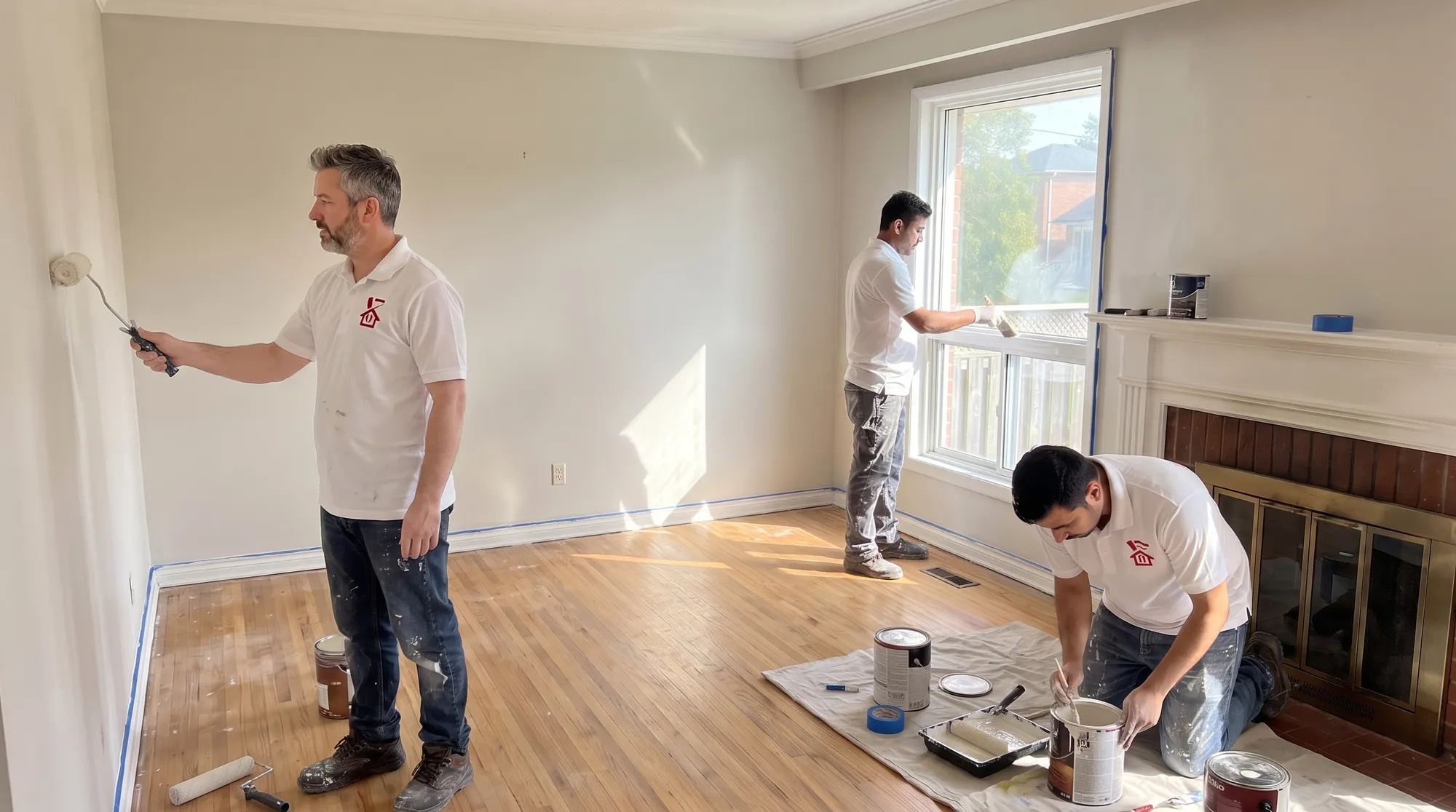
Drywall Repair Services in North York
Hole patching
Doorknob strikes, shelf brackets that let go, and the ragged holes a TV mount leaves when the toggle bolts come out. Small ones get filled and spotted. Past fist size they get backed with board so something solid sits behind the compound, then taped and coated wide enough that the light does not catch the edge.
Crack and seam repair
Butt joints that bubbled, tape lifting off a ceiling, and the stress cracks that run out at 45 degrees from the corner of a door or window. We cut the failed tape out rather than bury it, re-embed fresh tape, and build the joint back in coats. If the crack is seasonal we say so, because more mud on a moving joint has an expiry date.
Corner bead repair
Outside corners take the abuse in any hallway. Metal bead dents and rusts through, paper-faced bead delaminates, vinyl cracks along the nose. We cut the damaged length out, fasten new bead in straight, and coat it in three passes so the corner reads as one clean line instead of a wave.
Ceiling patch work
Pot light swaps, a fixture moved two feet, a relocated smoke alarm, or the hole left after a plumber chased a leak. Ceiling patches are less forgiving than walls because light rakes across them all day, so they get more feathering and a longer sand. We close a ceiling only once the leak is fixed.
Texture and stipple matching
A flat patch on a textured wall is the most obvious repair there is. We match common orange peel and light knockdown, and blend rather than stop at the patch line. Heavy custom texture and old stipple ceilings cannot always be matched invisibly in one spot, and when that is the case we price the surface as a unit.
Prime and paint
Repairs get spot-primed so the patch does not flash a duller sheen through the colour. Where the wall has aged, we roll corner to corner instead of chasing a ten-year-old paint. Same low-odour, low-VOC paint as the rest of our interior work, so the room is usable again quickly.
Rental turnover patches
Between tenants the clock is the constraint. We walk the unit, list the holes, scuffs and corner damage in one pass, and give you a scope you can sign off the same day, across North York and out through East York. Patch, sand, prime, paint, inside the vacancy window.
New hangs, board replacement, skim coating and plaster live alongside this on our drywall and plaster page.
Why choose us
Why North York Homeowners Choose Us
We fix the cause, not just the crack
A seam that popped once pops again if all it gets is another coat. We pull the failed tape and re-embed it, set a fresh screw beside every fastener pop instead of skimming over the head, and where a ceiling crack is seasonal truss movement we say so rather than sell the same patch twice.
Dust stays in the room it belongs in
Sanding compound is the messiest part of this trade, so the room gets sealed, sanding runs with vacuum assist, and we clean at the end of every day. In pre-1980 houses the power sander stays off the wall, because compound from that era can carry asbestos.
The repair is judged under your light
Compound looks perfect while it is wet and tells the truth under a lamp. We check every patch the way the finishing standard says to, five feet back in the room's own light, and where side light off a window will expose a joint we skim wider or coat the full wall.
Fifteen years on the tools, backed for three
Our crews average fifteen years in North York homes, we are rated 5.0 across 70 Google reviews, and we are fully insured and licensed in Ontario. Repairs and the paint over them carry a three-year workmanship warranty.
Nine Things Worth Knowing Before Drywall Repair
- Size the patch to the damage. A mesh square is fine over a small hole and useless over a large one. Past fist size the opening needs something rigid behind it.
- Retape a popped seam. More mud over a bubble hides it for a season. The tape underneath has already let go, so it has to come out and go back in properly.
- Set a screw beside every pop. A popped fastener means the board is not tight to the framing. A new screw an inch and a half away pulls it back, and only then is it worth filling.
- Use setting compound for the deep fill. It hardens by chemical reaction, shrinks less, and works in a cold house. Save lightweight and topping mud for the coats that get sanded.
- Wide beats thick. Three thin coats feathered further out each time disappear. One heavy coat leaves a bump visible from the doorway no matter how long you sand.
- Let each coat dry before the next. Sanding damp compound tears the edges and gums the paper, which only adds another coat to the job.
- Sand fine, and not into the board. The finishing standard calls for the finest grit that still cuts, without raising the panel face. Fuzzed paper shows through paint forever.
- Prime every repair before colour. Bare compound is thirstier than the aged wall around it, so unprimed patches flash a dull halo under the finish coat.
- Match the texture, or convert the whole surface. A flat patch on orange peel or stipple is the repair everyone notices. Blend it out, or take the wall smooth on purpose.
FAQ
Drywall Repair Questions, Answered
Can you repair the wall without repainting the whole room?
Often yes. A small patch we can colour-match just gets primed and spotted in. Past about dinner-plate size we roll that one wall, because fresh paint over old rarely matches in sheen.
How long does a drywall repair take?
A few small holes are usually one visit for patch, sand, prime and paint. Deep fills and new board take two, because each coat has to dry hard before the next.
Why does the same crack keep coming back every winter?
Because it is movement, not damage. Roof trusses arch in the cold and lift the ceiling off the wall below, so the crack opens in winter and closes by summer. It needs a floating corner or a moulding, not more mud.
Do you fix ceiling cracks and holes in ceilings?
Yes. Pot light swaps, moved fixtures, smoke alarm holes and access cuts are routine. Ceilings get more feathering because light rakes across them all day. If water caused it, the leak gets fixed first.
Can you match a textured or stipple finish?
Common orange peel and light knockdown, yes, blended outward rather than stopped at the patch line. Heavy hand texture and old stipple are harder to match in one spot, and we say so before we start.
My house is from the 1960s. Should I worry about the old joint compound?
It is worth knowing about. Compound made before 1980 can contain asbestos, and sanding is what puts fibres in the air. We keep power sanders off pre-1980 walls, and anything bigger than a patch gets tested first.
How much dust does drywall repair make?
Less than you are picturing, set up right. The room gets sealed off, sanding runs with vacuum assist where the surface allows, and we clean at the end of every day.
Do condo buildings put rules on drywall repair?
Most do, and we work to them. Elevator bookings, permitted hours and corridor dust control are the usual ones. In a high-rise we check what we are cutting into first, since some walls are fire separations.
Is there a warranty on the repair and the paint?
Yes, three years on the workmanship, covering the repair and the paint over it. If a joint we retaped shows up again inside that window we come back and redo it.
How do I get a price?
Call or fill out the form. For a few holes, photos and a rough measurement are enough. For seam failures or a ceiling crack we come and look. The estimate is free and in writing.