
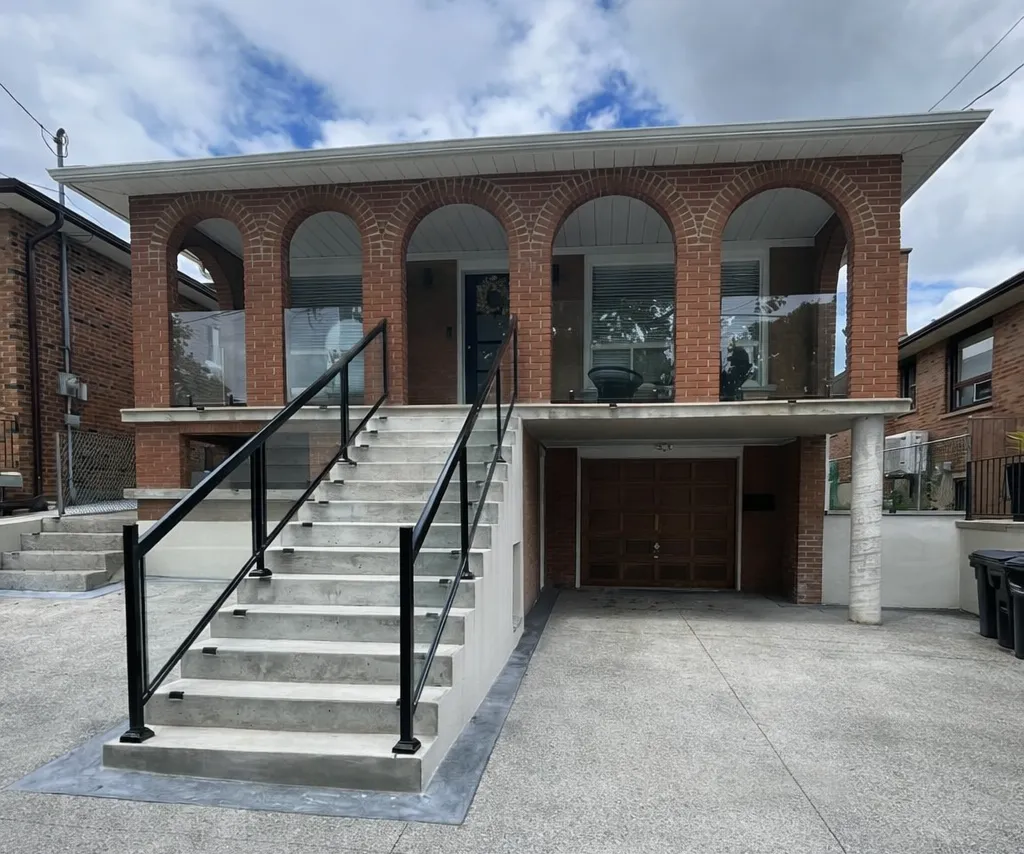
Need Stucco Painting in North York?
Stucco moves. Cement, sand and lime shrink as they cure, and the wall keeps shifting with the seasons, so fine cracks are normal rather than a defect. What is not normal is paint stretched over the top of them. A film bridges an open crack for a season, splits on the same line the first hard winter, and lets water in behind it.
Most stucco in North York is parging, the cement coat over the exposed top of a foundation, and it sits on nearly every postwar bungalow and side split that filled the old township after 1951, when North York roughly tripled in ten years. After that come porch skirts, chimneys, and the odd full stucco facade.
Houses built through the 1990s and 2000s often carry EIFS instead, a synthetic stucco on foam board that looks the same from the sidewalk and gets painted by different rules. So the first job on a stucco quote is not colour. It is working out what the wall is made of, why it is cracking, and whether water is behind it.
What Stucco Painting Actually Takes
It starts with the wall, not the colour chart. Press a flat hand hard against it and knock. Cement stucco is dead hard. EIFS gives slightly and sounds hollow, because behind the finish sits a fibreglass mesh, a thin base coat and a sheet of foam. A heavy waterproofing build over EIFS can hold vapour in that foam and delaminate the system, so synthetic walls get an acrylic rated for EIFS.
Then we read the cracks, because they do not all mean the same thing. A hairline under 1/16 of an inch is ordinary movement, and it fills. A web of fine random lines, what the trade calls map cracking, means the base coat cured badly, and that patch needs mesh and a skim coat rather than caulk. Diagonals off the corners of windows and doors are movement behind the wall, and from about 3/16 of an inch up it is a mason's call. What we fill gets routed open, packed with an elastomeric patch and primed, because filler wiped across the face of a crack shrinks back and prints through the colour.
Washing is where a lot of stucco damage gets done. Stucco is porous, and a pressure washer held close works like a sandblaster, so we stay under roughly 1,500 psi with a wide 25 or 40 degree tip and keep the wand three or four feet back. What comes off tells you the rest. Chalk means the old binder failed in the sun, and fresh paint over it bonds to powder. Mildew is not dirt. Sherwin-Williams says plainly it has to be removed first, or it grows through the new coat. A white bloom is efflorescence, salt carried out by moisture, which Sika calls a cold weather problem.
Fresh cement is the other trap. New stucco and new parging start near pH 13 to 14 and take about 30 days to settle toward 9. Paint into that and the alkali attacks the binder, and the coat peels. Wait the month, or use a product built for it. Sherwin-Williams rates Loxon XP from pH 6 to 13, allows it over concrete as young as seven days, publishes it at roughly 18 perms so the wall still dries outward, and has it bridging cracks to 2.5 mm at minus 10 Celsius.
Film build and timing close it out. Two coats at 14.5 to 18.5 wet mils is what the sheet asks for, and rough stucco drinks paint, so coverage falls to about 80 square feet a gallon. Standard exterior acrylic needs around 10 Celsius for the binder to fuse, masonry coatings run to about 2 Celsius, and the window here is late April through mid October. Toronto walls take dozens of freeze and thaw cycles a year, and National Research Council work cited by local masonry contractors put a southwest facing wall near 100 in one winter. That is why the coating has to move rather than only cover. Stucco is one piece of what we do as North York painters, including out in Parkwoods.
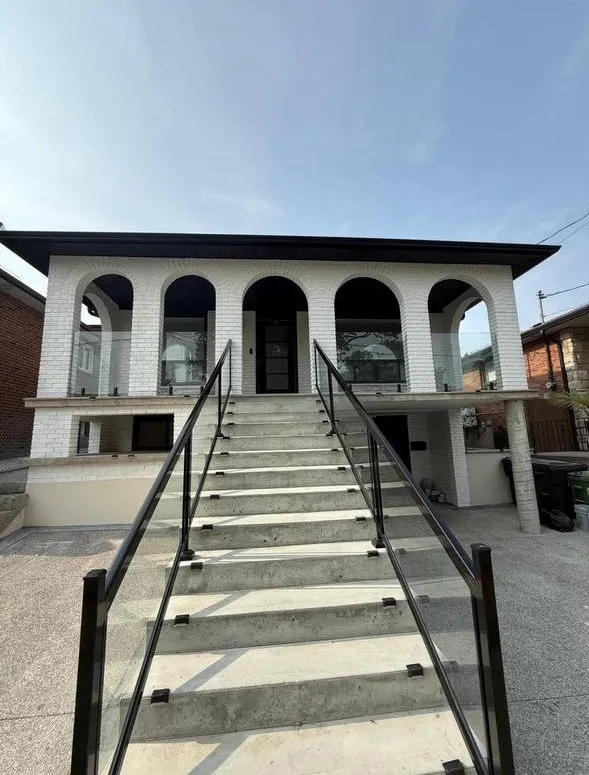
Stucco Painting Services in North York
Traditional cement stucco
The real thing, hard the whole way through, on walls, gables and porch skirts. Low pressure wash, cracks opened and filled, patches primed, then two coats of a breathable masonry finish back rolled into the texture.
EIFS and acrylic stucco
Synthetic stucco on foam board, common on houses built through the 1990s and 2000s. It is softer, so it gets a gentler wash and an acrylic rated for EIFS, not a heavy build that traps vapour in the foam.
Parged foundation walls and porch skirts
The most common stucco surface on a North York house, and the one taking road salt off the driveway all winter. We scrape back what has let go, patch it, and coat it in a masonry product that tolerates the alkali.
Crack repair before any colour
Hairline cracks get routed open, cleaned out, filled with an elastomeric patch and primed. Fine random cracking gets mesh and a skim coat. Wide cracks, diagonals off a window corner, or a hollow sounding section get flagged for a mason first.
Low pressure washing and efflorescence
Wide tip, low pressure, and enough distance to clean the wall without cutting it. Mildew gets killed rather than rinsed, and efflorescence gets dry brushed and flushed clean. If the bloom keeps returning, we tell you where the water is coming from.
Brick bands, block and chimney stacks
Painted brick and a stucco wall are the same argument. The surface has to keep breathing, so we use masonry coatings with a published perm rating. A chimney gets treated as its own exposure, since it takes weather on four sides.
Where stucco meets wood and trim
Different materials expand at different rates, so the transitions fail first. Sills, fascia, soffits and window trim get their own prep, and the joints get a flexible sealant that stays tight through a winter of movement.
Full exteriors with stucco in the mix
Most of our stucco work is one part of a whole house repaint. Stucco walls, a parged foundation, wood trim and railings in one visit, each on the coating it needs. We work across North York, including Don Mills.
Why choose us
Why North York Homeowners Choose Us
We work out what your wall is before we quote it
Cement stucco and EIFS look the same from the curb and take different coatings. We press the wall, knock it, and check any chipped corner before a number gets written down. Guessing wrong on a synthetic wall costs more than a coat of paint.
Cracks get opened and filled, not coated over
We rout the crack open, clean it out, fill it with a flexible patch, and prime it. On pre-1980 walls we treat the old coating as leaded and prep wet, because scraping old exterior paint is how lead dust ends up in your soil. Keeping the cladding sound is also on you as an owner under the City's property standards bylaw.
Breathable coatings, and enough of them
A stucco wall has to dry outward, so we use masonry coatings with a published perm rating, and we put on the film thickness the manufacturer asks for instead of stretching a gallon. We are 100% insured and licensed in Ontario.
Fifteen years on the tools, backed for three
Our crews average fifteen years of painting and we are rated 5.0 across 70 Google reviews. The workmanship carries a three-year warranty. If a crack we filled opens inside that window, we come back to it.
Nine Things Worth Knowing Before You Paint Stucco
- Fill the cracks first, every time. A coating stretched over an open crack bridges it for one season, splits on the same line, and lets water in behind the wall.
- Know which crack you are looking at. Hairline under 1/16 of an inch fills. Fine random webbing needs mesh and a skim coat. A diagonal off a window corner needs the structure checked.
- Keep the pressure washer under about 1,500 psi, on a wide 25 or 40 degree tip, three or four feet back. High pressure carves the texture and drives water behind the cladding.
- Give the wall days to dry, not hours. Stucco holds water after a wash, and a damp wall traps it under the film, which then blisters.
- Wait 30 days on new stucco or fresh parging, or use a coating rated for high pH. Fresh cement sits near pH 13 to 14, and ordinary paint applied into that loses adhesion.
- Buy the perm rating, not the label on the front. Above 10 perms is vapour permeable, and a wall that cannot dry outward pushes its coating off.
- Two coats, at the mils the manufacturer prints. Rough texture takes roughly 80 square feet to the gallon. Check the wall in low evening sun, which shows every missed spot.
- Chalk and mildew have to go before paint does. Chalk means the old binder failed, so new paint bonds to powder. Mildew grows back through a fresh coat if it is not killed first.
- Watch the thermometer at both ends. Standard exterior acrylic needs about 10 Celsius to form a proper film, and a masonry coating wants the wall above roughly 2 Celsius for 48 hours after.
FAQ
Stucco Painting Questions, Answered
How do I know if I have real stucco or EIFS?
Press your palm hard on the wall, then knock. Cement stucco is solid and dead sounding. EIFS gives a little and sounds hollow, because there is foam board behind the finish. At a chipped corner, look for grey cement or white foam.
Can you paint over stucco that has already been painted?
Yes, wherever the old coating is still bonded. Peeled or checked areas get scraped back to a sound edge and glossy patches get dulled. If your hand comes off the wall white, that is chalk, and it washes off first.
What is elastomeric paint, and does my wall need it?
A thick, flexible masonry coating that stretches instead of splitting. Sherwin-Williams rates its Loxon XP to bridge a crack up to 2.5 mm at minus 10 Celsius. On EIFS, a lighter acrylic made for that substrate is better.
Will painting stucco trap moisture in the wall?
Only if the wrong coating goes on. Stucco has to dry outward, so it needs a real perm rating. Above 10 perms counts as vapour permeable. Sealing stucco under an impermeable film is how you get blisters.
Do you repair the cracks, and which ones need a mason?
We open, fill and prime hairline and moderate cracks, and fine random cracking gets mesh and a skim coat. What we do not paint over is movement. Cracks from about 3/16 of an inch, diagonals off a window corner, and hollow sections need a mason.
My stucco or parging is brand new. How soon can it be painted?
Fresh cement runs near pH 13 and takes roughly 30 days to fall below 10. Paint into that and the alkali attacks the binder and the coat peels. Wait the month, or use a coating rated for high pH.
There is a white powdery bloom on the wall. What is that?
Efflorescence. Salts inside the wall dissolve in moisture, reach the surface, and are left behind when the water evaporates. Sika calls it a cold weather problem that eases in spring. If it keeps returning, water is still getting in.
When is the best time of year to paint stucco in North York?
Late April through mid October. Standard exterior acrylic needs around 10 Celsius for the binder to fuse, and a cold tolerant masonry coating still wants the wall above about 2 Celsius for two days after.
How long does it last, is it warrantied, and how do I get a price?
How long it lasts comes down to the prep and to whether water is still getting into the wall. The workmanship carries a three-year warranty and we are fully insured and licensed in Ontario. Call (416) 319-8444 or send the form.